Chronological Age vs Biological Age: What’s the Difference?
- Published: Jun 03, 2026
- Last updated: Jun 13, 2026
- Calculating reading time...
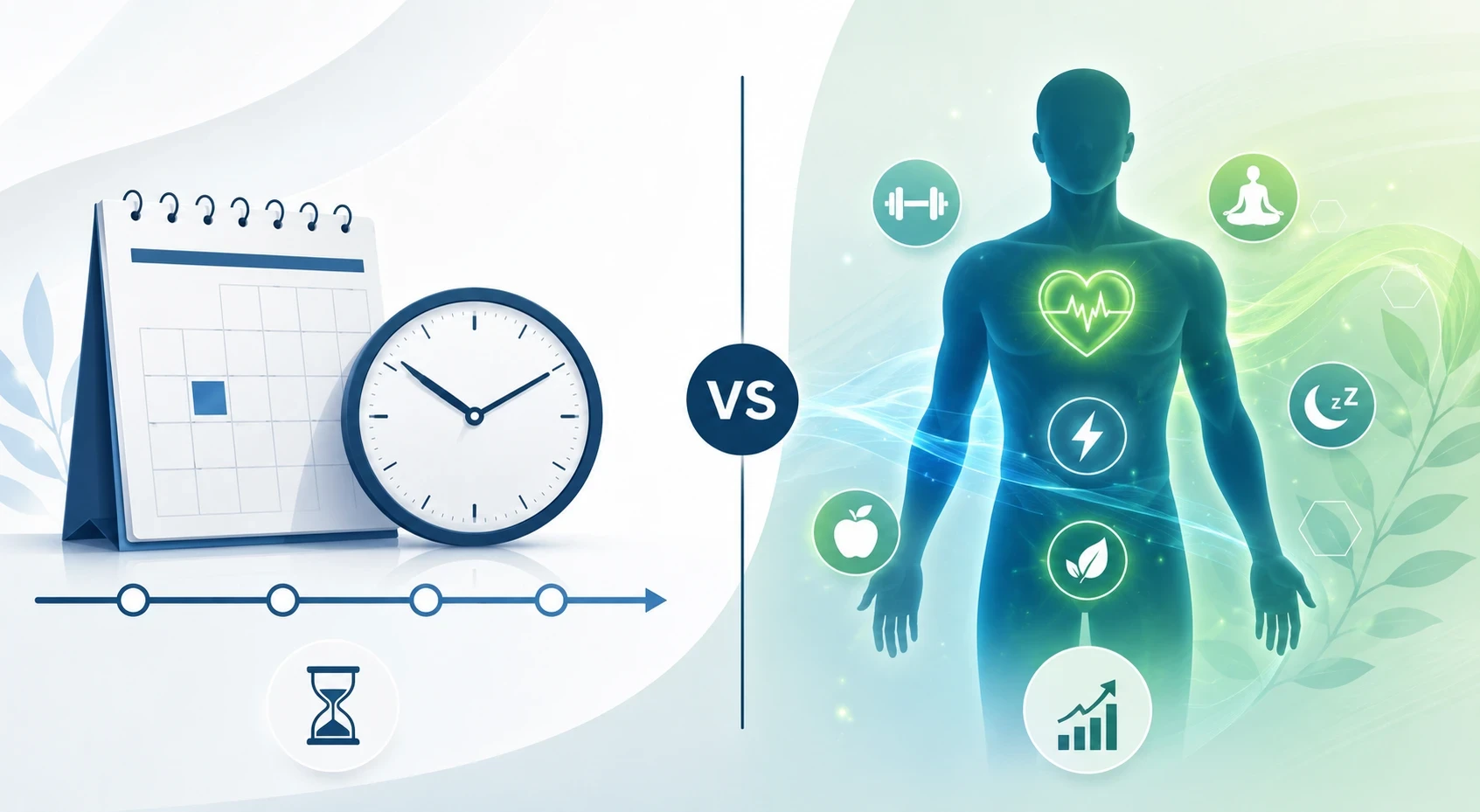
Have you ever noticed that two people can be the same age on paper but look and feel entirely different in real life? One might appear energetic, fit, and youthful, while the other may feel older, tired, or less active.
This happens because chronological age vs biological age are not the same thing. Chronological age is based on your date of birth, while biological age reflects how your body functions based on health and lifestyle factors.
This difference is important in health science, ageing research, and modern wellness tracking systems.
Chronological age (also called calendar age) increases in a fixed, predictable way every year. However, biological age can vary depending on factors such as sleep, diet, exercise, stress, and overall health.
For example, a 40-year-old person who exercises regularly and eats healthy may have a “body age” closer to 30, while someone with poor lifestyle habits may feel older than their actual age.
Chronological age is calculated using a simple date-based comparison between birth date and the current date. You can use a chronological age calculator to get an exact result in years, months, and days.
If you want to understand the manual method, read our guide on how to calculate age manually step-by-step.
Let’s explore the difference in detail.
What Is Chronological Age?
Your chronological age is the most basic and official way of measuring age. It is also called calendar age because it is based purely on time.
For a broader definition of age and its classifications, see Chronological age definition (Wikipedia).
It is calculated from your date of birth (DOB) to the current date using calendar time.
Key points:
Based strictly on date of birth (DOB)
Measured in years, months, and days
Does not depend on health or lifestyle
Used in legal documents, school admissions, passports, and jobs
Real Example:
If someone is born on 1 January 2000, then in 2026, their calendar-based age is 26 years.
This is calculated by comparing the birthdate with the current date to determine the exact age.
Leap years can also slightly affect age calculation accuracy, which we explain in detail in how leap years affect age calculation.
This is why chronological age is used in official systems where standardization and accuracy are required.
What Is Biological Age?
Now let’s understand what biological age is.
In real-world health observation, biological age is often used as a comparison marker rather than a fixed measurement.
It is not based on your birth date, but instead on:
lifestyle habits
physical health
stress levels
metabolism
genetics
This is why the biological age vs real age can often be different.
Simple explanation:
Chronological age = calendar age
Biological age = body condition age
Example:
Two people are both 35 years old:
Person A exercises, eats healthy, sleeps well → biological age may be 30
Person B smokes, stressed, poor diet → biological age may be 45
This is a real-world example of aging differences.
This concept is widely used in health science and aging research to study how lifestyle impacts human longevity.
In health research, biological age is often used as a comparative indicator to understand how lifestyle choices influence ageing patterns over time.
Chronological Age vs Biological Age — Key Differences
Let’s clearly understand the difference between chronological and biological age.
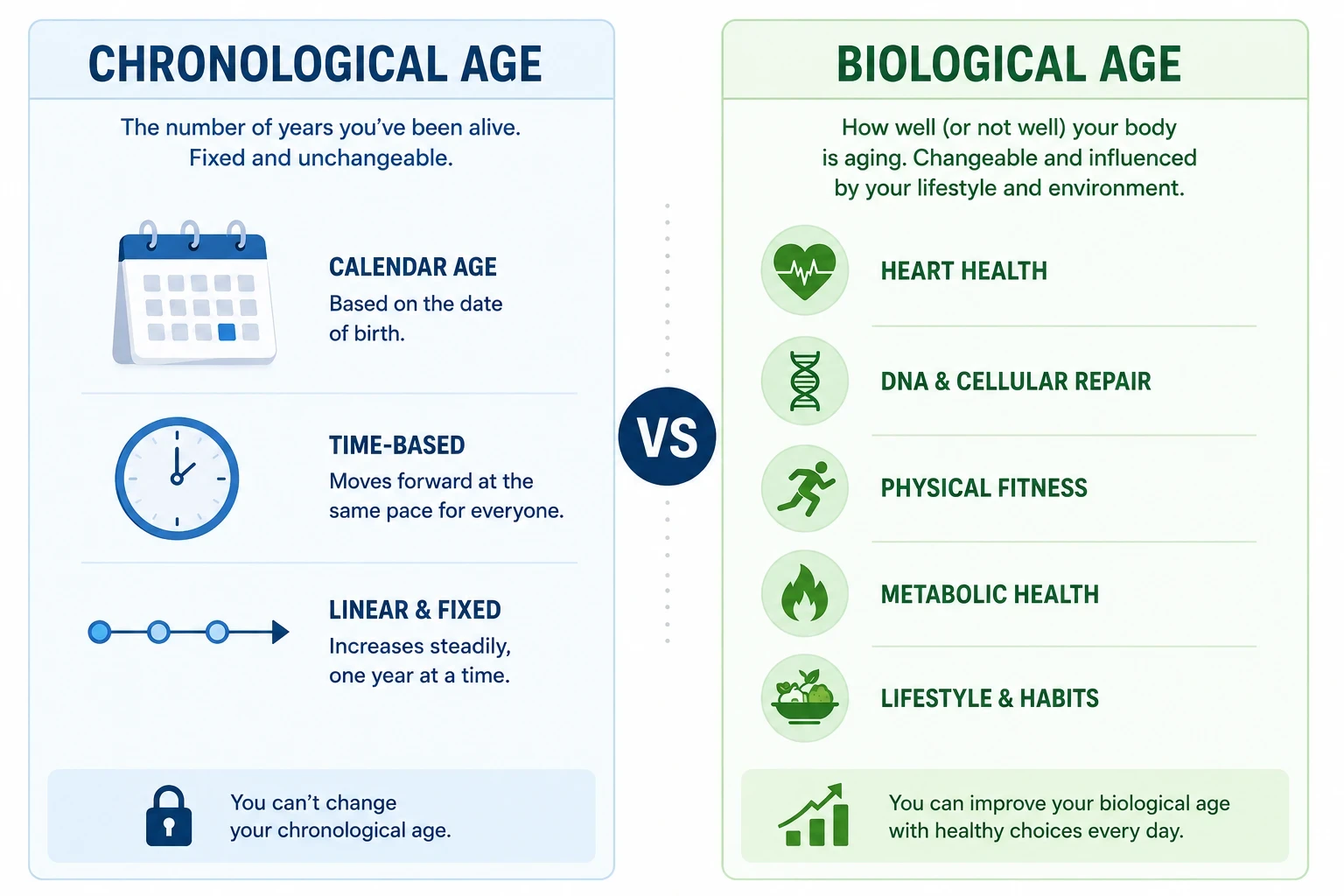
In simple terms, chronological age is fixed, while biological age is dynamic and influenced by daily lifestyle habits.
Important insight:
Chronological age is fixed and universal
Biological age varies from person to person
Chronological age is universally fixed, while biological age varies from person to person.
This is why date-based age calculations always refer only to chronological age.
Want to know your exact age in years, months, and days?
You can quickly check your chronological age using our free age calculator. It takes only a few seconds and gives accurate results instantly.
Why Two People of the Same Age Age Differently
This is one of the most interesting real-life observations in human ageing factors.
Even if two people share the same calendar age, their bodies may age differently due to:
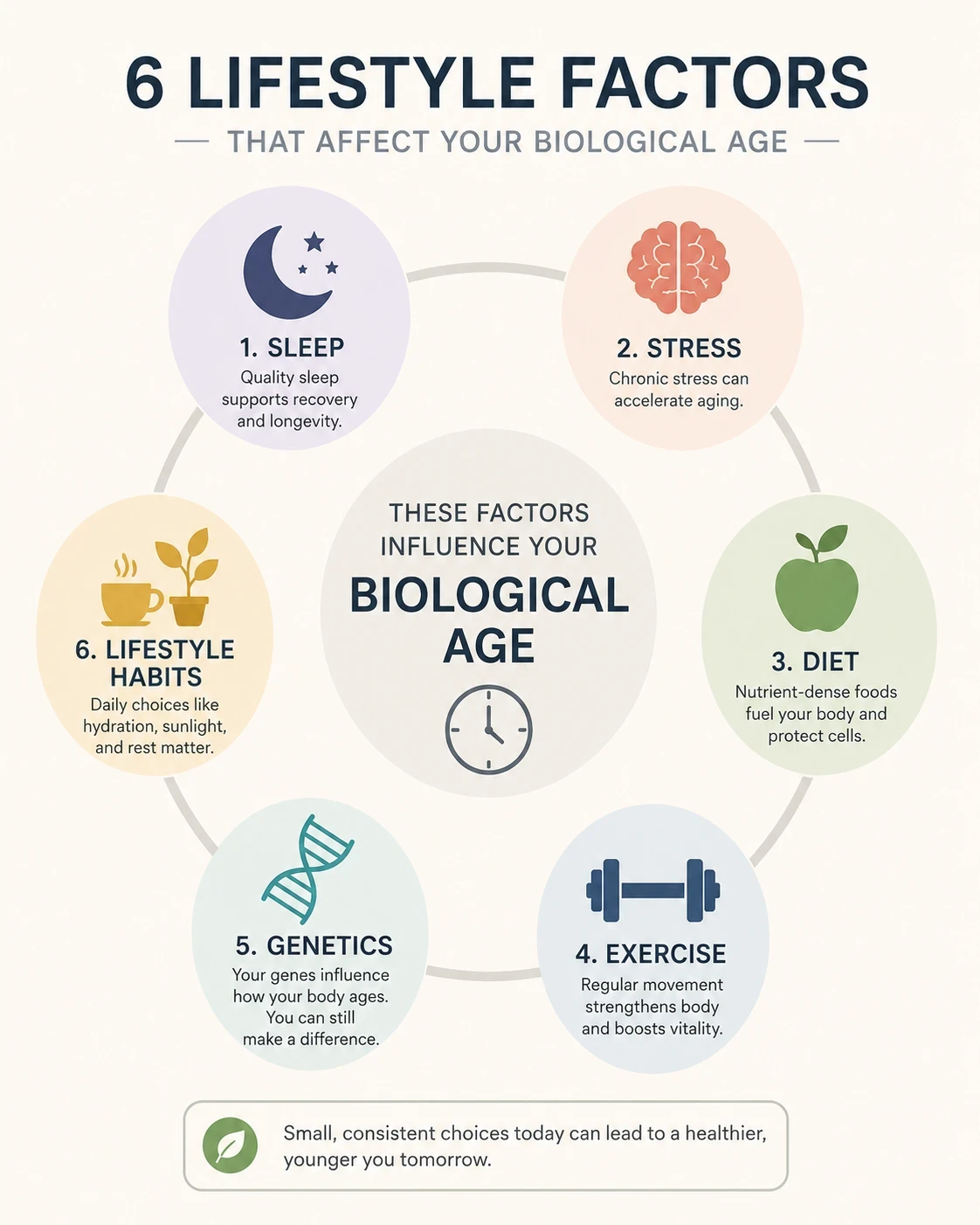
1. Sleep Quality
Poor sleep accelerates ageing and increases fatigue.
2. Stress Levels
High stress affects hormones and overall health.
3. Diet Habits
Processed food vs. a balanced diet has a major impact.
4. Exercise
Regular physical activity slows aging.
5. Genetics
Some people naturally age slower or faster.
6. Lifestyle Choices
Smoking, alcohol, and inactivity increase aging speed.
This explains why people of the same age often show different signs of ageing, even if their chronological age is identical.
These factors influence cellular repair processes and overall biological aging speed.
How Biological Age Is Estimated (Not Calculated by Age Calculators)
Many people think age calculators can show biological age — but that is incorrect.
Chronological age is determined by comparing date of birth with the current date using standard calendar-based calculations.
Biological age, however, is estimated using health-based indicators, not time.
Unlike chronological age, it cannot be calculated using a fixed formula and instead relies on biological markers and health indicators.
These include:
heart health
metabolism rate
physical fitness levels
general wellness indicators
biomarkers (in research settings)
This is part of physiological ageing, not calendar-based age.
⚠️ Important: This is informational only and not a medical diagnosis.
Does an Online Age Calculator Measure Biological Age?
No — and this is a very important clarification.
An online age calculator only measures chronological age.
Why?
Because it uses a simple formula:
👉 Date of Birth → Current Date = Age
It does NOT analyze:
health condition
body fitness
lifestyle habits
So if someone asks:
“does age calculator show biological age”
The answer is clearly NO.
It only shows date of birth-based age calculation.
Can Biological Age Be Different From Chronological Age?
Yes — absolutely.
This is a core concept in chronological vs physiological ageing.
Biological age can be lower or higher than your chronological age, depending on how your body is affected by lifestyle and health factors.
Biological Age Can Be LOWER If:
You exercise regularly
You eat healthy food
You manage stress well
In this case, your body may function like someone younger than your actual age.
Biological age can be HIGHER if:
You are inactive
You have poor diet habits.
You experience chronic stress.
Here, your body may age faster than your actual calendar age.
This shows that biological ageing is driven more by lifestyle than by time itself.
Biological age is a scientific concept used to estimate how well or poorly the body is functioning compared to actual chronological age.
Simple Real-World Example:
A 30-year-old person could have a biological age of:
25 if they follow a healthy lifestyle
40 if they have poor health habits
This shows how two people with the same chronological age can have completely different biological ageing patterns.
Which Type of Age Matters More?
Both are important, but for different reasons:
Chronological Age:
Used in legal documents
Required for school, jobs, ID verification
Calculated by tools like an age calculator
Biological Age:
Used for health awareness
Helps understand lifestyle impact
Used in wellness studies
So neither replaces the other.
Why Understanding Both Types of Age Matters
Understanding the ageing process from both perspectives helps you:
improve health awareness
understand how lifestyle affects aging
separate legal age from body condition
take better lifestyle decisions
It gives a more complete picture of human aging.
Real-Life Case Study (Practical Example)
Let’s understand this with a real-life scenario.
Case:
Two friends, Ali and Ahmed, are both 28 years old.
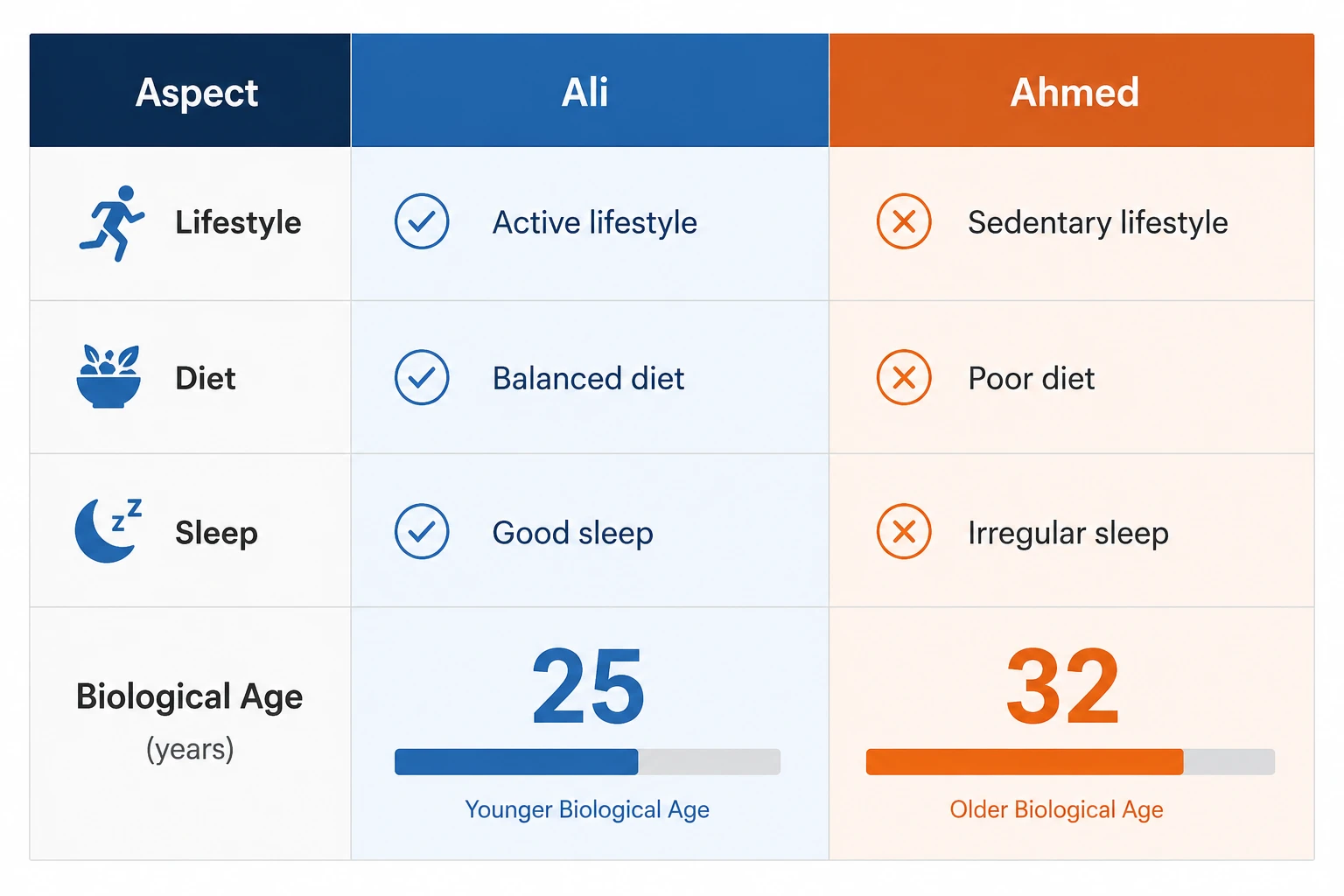
Ali:
exercises 5 times a week
eats balanced diet
sleeps 7–8 hours
👉 His biological age: ~25
Ahmed:
sedentary lifestyle
frequent fast food
irregular sleep
👉 His biological age: ~32
Even though both share the same chronological age, their bodies behave differently.
This is a real-world example of health and lifestyle factors affecting aging.
This type of variation is commonly observed in lifestyle-based health tracking studies.
This difference is one reason why modern health studies increasingly separate biological aging from chronological age.
Simple Framework: “Age Type Comparison Model”
To make it easy, remember this framework:
Step 1:
Chronological age = “Time passed since birth”
Step 2:
Biological age = “How your body behaves”
Step 3:
Age calculator = “Only measures Step 1”
This is the simplest way to understand the difference.
Why Online Age Calculators Matter
Chronological age calculation is widely used in legal, academic, and administrative systems where accurate age determination is required.
It provides a standardized way of measuring age based on date of birth and current date, ensuring consistency across official records.
However, mistakes in manual calculations are common, which we explain in common age calculation mistakes and how to avoid them.
This method eliminates manual calculation errors and maintains accuracy even in cases involving leap years and different month lengths.
That is why date-based age calculation is considered a reliable standard in systems that require precise age verification.
FAQs
Chronological age is the number of years since your date of birth (calendar age). Biological age reflects how your body functions based on health, lifestyle, and internal conditions. It can be different from your actual age.
No. An age calculator only calculates chronological (DOB-based) age using your date of birth and calendar logic. It does not measure health, fitness, metabolism, or lifestyle factors.
Yes. Biological age is not fixed. It can decrease with healthy habits like regular exercise, quality sleep, and balanced diet, or increase due to stress, inactivity, and unhealthy lifestyle choices.
Biological age differs from chronological (calendar) age because it is influenced by internal body condition, including metabolism, genetics, sleep quality, and lifestyle habits rather than just time.
An online age calculator calculates chronological (calendar-based) age using your date of birth and current date. It provides the exact age in years, months, and days but does not estimate biological age.
Chronological age is your actual age calculated from your date of birth. It increases every year on your birthday and is used in official records such as education, legal documents, passports, and employment systems.
This is a time-based measurement and does not depend on how the body looks or functions. It is the standard and most widely accepted form of age used globally.
Yes. A person can have a lower biological age than their calendar age if they follow a healthy lifestyle. Regular physical activity, balanced nutrition, proper sleep, and stress control all help slow down biological ageing.
For example, a 35-year-old person with healthy habits may have a body condition similar to someone aged 28–30.
People age differently because biological aging is influenced by multiple factors beyond time. Even individuals of the same chronological age may show different physical conditions.
Key factors include sleep quality, stress levels, diet, exercise habits, and genetics. These elements determine how fast or slow the body ages over time.
The four commonly recognized types of age are chronological age, biological age, mental age, and emotional age. These represent different ways of understanding human aging, including time-based age, physical condition, thinking ability, and emotional maturity.
Conclusion
Understanding chronological age vs biological age helps you see ageing from two perspectives:
One is fixed and mathematical
The other is flexible and health-based.
Your online age calculator always gives accurate chronological age (also known as calendar age) using date of birth and calendar logic.
But biological age gives insight into how your body is actually aging.
Understanding both helps you see aging more clearly — not just as time passing, but as a combination of time and lifestyle impact.
Both are important — but they serve entirely different purposes. Understanding both types of age gives a more realistic view of how the human body changes over time.
Try Free Online Age Calculator Now