Invoice Management Guide for Freelancers and Small Businesses
- Published: Nov 27, 2025
- Last updated: Jul 02, 2026
- Calculating reading time...

Running a freelance business or managing a small company involves more than delivering services. It also requires a clear billing system that keeps payments organized, improves visibility, and supports smooth financial operations. This is where invoice management becomes an essential part of day-to-day business activity.
Many freelancers start with only a few clients and simple payment arrangements. Small businesses often follow the same path. As work increases and client relationships grow, billing becomes more difficult to manage. Without a proper system, businesses often struggle with delayed payments, scattered records, inconsistent follow-ups, and unclear financial visibility.
Invoice management is not just about sending invoices. It is about building a reliable way to organize billing activity, track payments, maintain financial records, and ensure important information is always accessible when needed.
A well-managed approach helps businesses maintain steady cash flow, reduce administrative pressure, and operate with greater confidence. Whether you are handling multiple freelance projects or managing a growing client base, an organized billing system improves efficiency and strengthens financial control.
This guide explains the structure, workflows, and best practices that help freelancers and small businesses build reliable invoice management systems and maintain long-term financial stability.
Key Takeaways
Invoice management focuses on organizing billing, payments, and records.
Strong systems improve cash flow visibility.
Freelancers and small businesses face different billing challenges.
Digital tools reduce manual administrative workload.
Scalable invoice management systems support long-term business growth.
The Role of Invoice Management in Business Operations
Strong businesses rely on a business system. Sales teams generate opportunities, operations teams deliver services, and accounting functions ensure financial stability. Invoice management sits at the intersection of these activities.
Invoice systems are a core part of financial management, which governs how businesses handle money, reporting, and planning.
Every completed project eventually becomes part of a financial transaction. When billing activities are disorganized, it becomes difficult to understand revenue performance, outstanding balances, and future cash flow expectations.
A structured invoicing system helps businesses:
Monitor revenue streams
Improve visibility into outstanding balances
Maintain clear financial records system
Support accounting and bookkeeping activities
Create predictable payment cycles
For freelancers, proper management provides clarity regarding active projects and expected income. For small businesses, it helps leadership teams make informed decisions about hiring, growth, and operational planning.
Good invoicing also builds client trust. When businesses maintain consistent documentation and communication, clients often view them as more reliable and professional.
Financial organization becomes especially important during tax preparation, budgeting exercises, financial reviews, and business audits. Having accurate records readily available saves significant time and reduces unnecessary stress.
Invoicing is not just an administrative task—it plays a direct role in how a business manages revenue and operations. It is a core part of financial management and overall business structure.
A detailed explanation of billing structure and its financial role can be found in the Invoice (Wikipedia definition) article.
The Complete Invoice Lifecycle
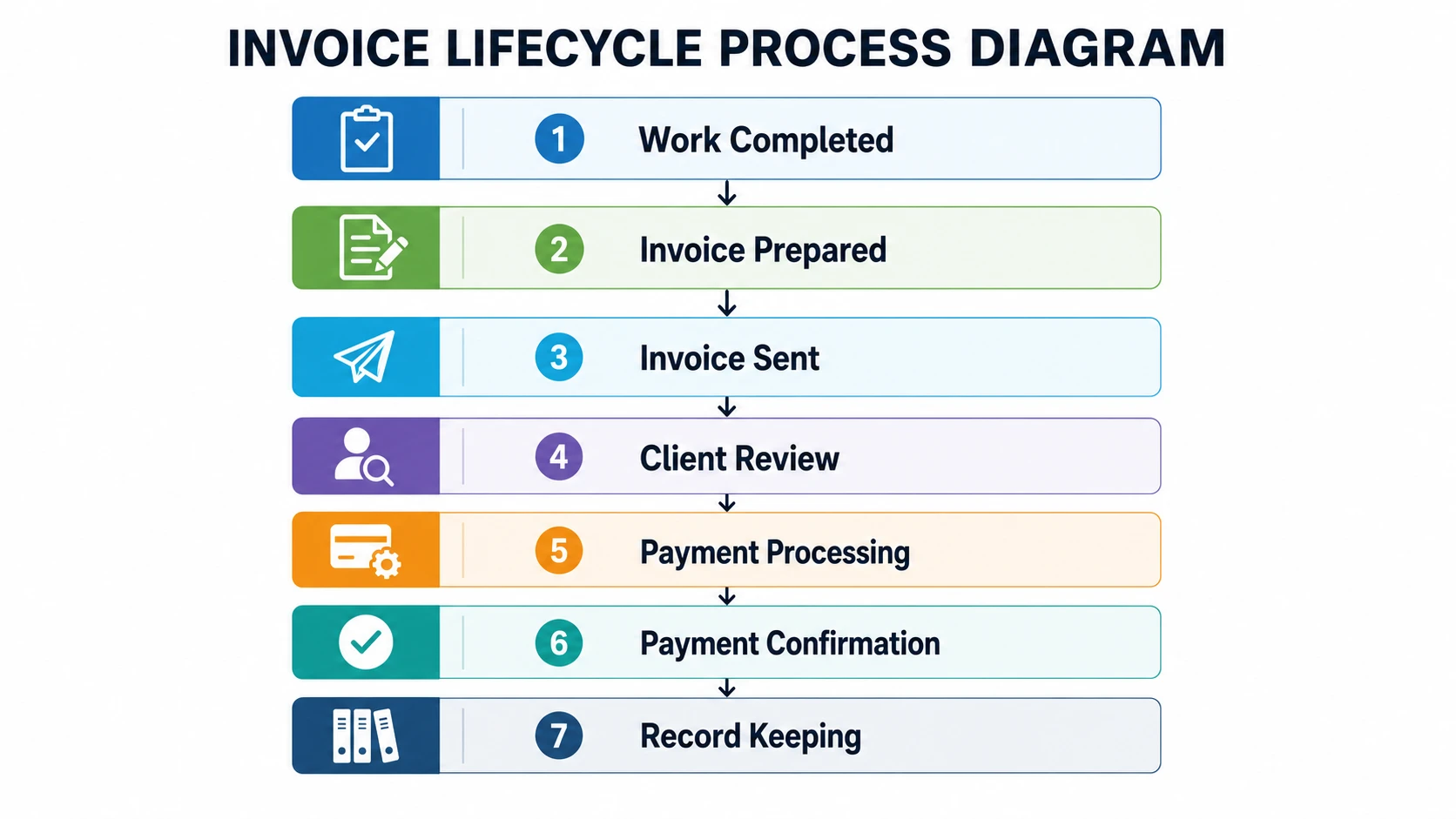
Every invoice follows a journey from project completion to long-term record storage. Understanding this lifecycle helps businesses create more efficient organization methods and improve overall organization.
Work Completed
The system begins when a product is delivered or a service is finished. At this stage, all project details should be documented, including agreed deliverables, pricing, timelines, and any approved changes.
Clear project records reduce confusion later in the billing cycle.
Invoice Prepared
Once work is completed, billing information is compiled and organized. Businesses gather project details, client references, pricing agreements, and supporting documentation before preparing billing records.
This stage ensures that all information is accurate and aligned with agreed terms.
Invoice Sent
After preparation, documentation is delivered to the client through email, billing software, or internal procurement setup.
The timing of delivery often influences payment timelines. Delays in sending documentation can extend payment cycles unnecessarily.
Client Review
Many clients conduct internal reviews before processing payments. Depending on the organization, approvals may involve project managers, department heads, finance teams, or procurement departments.
During this stage, clients verify project details and confirm that billing aligns with expectations.
Payment Processing
Once approved, payment enters the client's financial business process. Processing times vary depending on company policies, payment methods, and internal procedures.
Businesses often monitor payment status during this phase to maintain visibility over expected revenue.
Payment Confirmation
After funds are received, payment records are updated and reconciled. This step confirms that transactions have been completed successfully.
Maintaining accurate records helps prevent confusion and supports future financial reporting.
record-keeping
The final stage involves storing documentation for future reference.
Well-maintained archives support audits, tax preparation, performance reviews, and long-term business planning.
To make the lifecycle easier to understand, the full process is summarized below:
The Complete Invoice Lifecycle
Together, these stages form the foundation of an effective invoice workflow that supports consistent financial operations.
Building an Effective Billing Process
As businesses grow, consistency becomes increasingly important. A structured billing process helps ensure that financial activities remain organized regardless of client volume.
Organizing Client and Billing Information
Standardizing Client Information
Maintaining consistent client records simplifies administration and reduces confusion.
Important information may include:
Business names
Contact details
Billing contacts
Project references
Payment preferences
Keeping information centralized reduces administrative delays and improves accuracy.
Organizing Billing Schedules
Different clients often operate on different billing schedules.
Examples include:
Documenting schedules helps businesses maintain consistency and avoid overlooked billing activities.
Managing Repeat Clients
Long-term clients often require recurring administrative attention.
Maintaining organized histories of projects, agreements, and payment activity helps streamline future engagements and reduce repetitive work.
Tracking Payments and Maintaining Financial Records
Tracking Outstanding Payments
Monitoring unpaid balances is essential for maintaining healthy cash flow.
A structured routine helps businesses review open balances and identify overdue accounts before they become larger issues.
Example:
A freelance designer working with three clients may manage payment records manually without difficulty. As client numbers grow to fifteen or twenty active projects, keeping track of due dates, payment statuses, and project references often becomes more challenging. Businesses that establish structured billing schedules early usually spend less time chasing information later.
Maintaining Financial Documentation
Comprehensive business records support business stability.
These records may include:
Contracts
Project approvals
Billing documents
Payment confirmations
Client correspondence
Strong documentation practices improve accountability and simplify financial reporting.
The following table connects each billing activity with its practical impact on business operations:
Billing Process Framework Summary
Learn the Difference Between Invoices and Receipts
Invoice Management Challenges Faced by Freelancers
Successful freelancers often encounter unique operational challenges that make invoice management for freelancers increasingly important.
Challenges Faced by Freelancers
Late Payments
Freelancers frequently depend on timely payments to maintain predictable income. Delays can affect budgeting, project planning, and cash flow stability.
Delayed payments are one of the most common cash flow challenges for freelancers and service-based businesses. Even a delay of 7–14 days can create pressure on daily operational expenses, especially for smaller teams. This is why structured invoice tracking and consistent billing systems are widely used across modern digital businesses to maintain financial stability and reduce uncertainty in cash flow cycles.
Late payments are closely related to accounts receivable concepts, which describe money owed to a business for delivered services.
Multiple Active Clients
Managing several clients simultaneously increases administrative complexity. Different payment terms and project structures require careful organization.
Cross-Border Billing
International projects may involve varying currencies, payment platforms, and financial requirements.
Managing these variables requires additional attention and documentation.
Project-Based Work
Many freelance projects operate under unique scopes and timelines.
Each engagement may require different billing schedules and approval processes.
Retainer Agreements
Retainer clients often generate recurring administrative responsibilities.
Maintaining organized schedules helps ensure consistency and reduces missed billing opportunities.
For freelancers, success often depends not only on delivering quality work but also on maintaining reliable financial systems behind the scenes.
Invoice Management Challenges Faced by Small Businesses
As organizations grow, invoice management for small businesses becomes more complex due to increasing client volumes and operational demands.
Challenges Faced by Small Businesses
Growing Client Volume
More customers typically mean more billing activities, payment schedules, and documentation requirements.
Without standardized systems, administrative workloads can increase rapidly.
Scenario:
A small agency serving five regular clients may handle billing internally with little difficulty. When the client base expands to thirty or forty accounts, payment schedules, reporting requirements, and internal coordination often become significantly more complex. Without a documented process, administrative workloads can increase faster than revenue.
Team Coordination
Billing responsibilities may involve multiple departments.
Sales teams, project managers, finance staff, and business owners often contribute information throughout the process.
Payment Tracking Across Departments
As organizations expand, maintaining consistent payment tracking becomes increasingly important.
Visibility into outstanding balances helps improve forecasting and resource allocation.
Tax Documentation
Growing businesses generate larger volumes of financial data.
Structured documentation makes it easier to ensure compliance and reduce preparation time during reporting periods.
Financial Reporting
Business decisions often rely on accurate financial insights.
Reliable invoicing systems support reporting activities and provide leadership teams with valuable operational visibility.
Key Documents Used Alongside Invoices
Invoices operate within a larger financial ecosystem. Several supporting documents help businesses maintain clarity and organization.
Quotes
Quotes provide preliminary pricing information before work begins. To understand the foundation of billing documents, read our guide on what is an invoice for a complete breakdown.
They establish expectations and support project planning.
Estimates
Estimates offer projected costs when exact pricing cannot yet be determined.
They provide flexibility while helping clients understand anticipated expenses.
Purchase Orders
Many organizations use purchase orders to authorize spending before projects begin.
These documents often become part of a broader procurement business process.
Receipts
Receipts serve as supporting financial documentation after payment activity occurs.
To better understand how receipts relate to invoicing documentation, see our guide on Invoice vs Receipt: What's the Difference?
Credit Notes
Credit notes help businesses document adjustments, refunds, or account corrections.
Maintaining accurate billing archives ensures transparency between businesses and clients.
Financial Reports
Invoices often contribute valuable data to broader financial reports, helping businesses evaluate revenue trends and operational performance.
How Digital Invoice Management Improves Efficiency
Modern businesses increasingly rely on technology to improve operational performance.
A digital invoicing system helps reduce administrative workloads while improving visibility across billing activities.
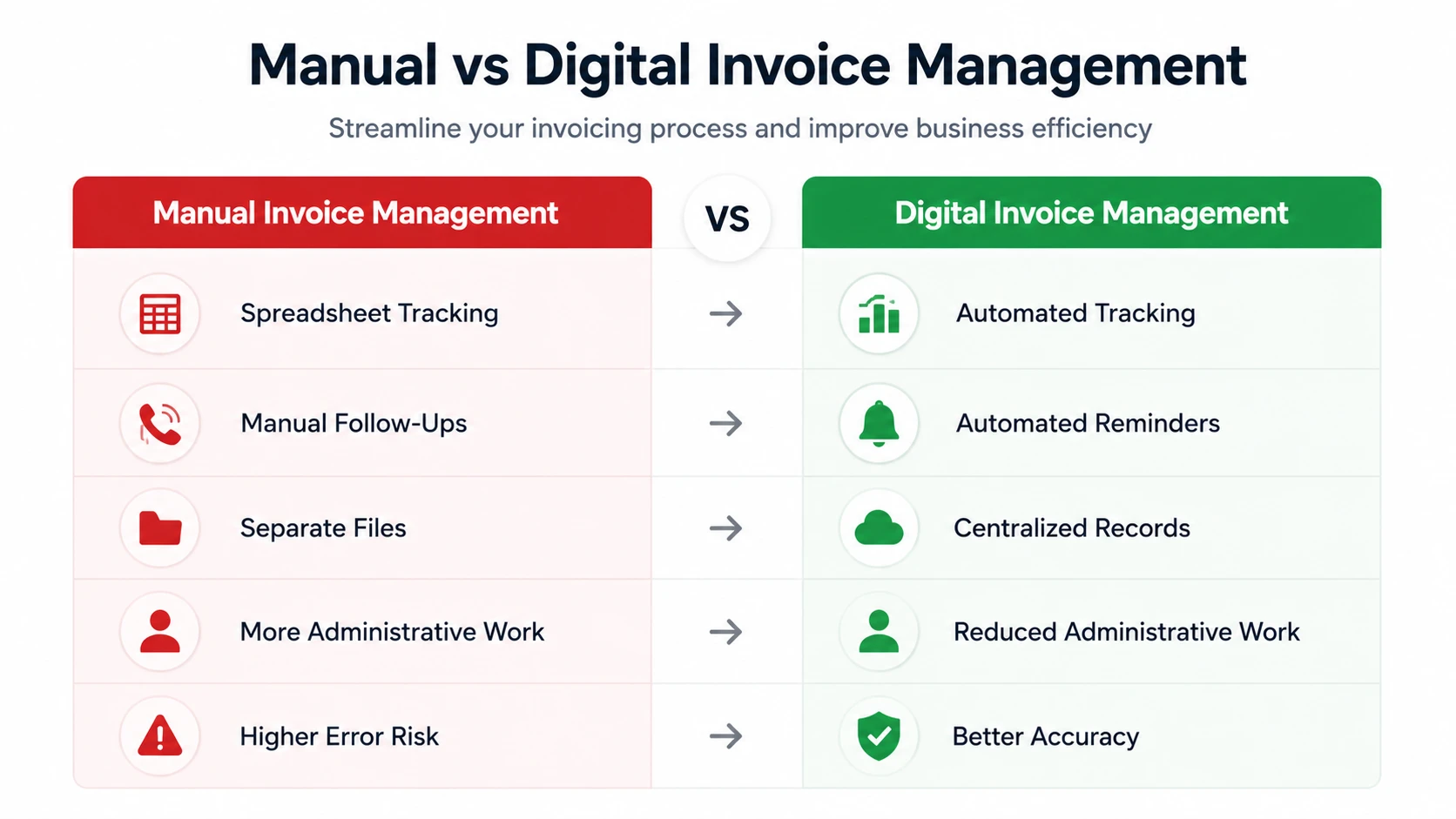
Industry reports from accounting software platforms indicate that businesses using automated invoicing and payment tracking often experience fewer late payments and reduced administrative workload compared to manual systems.
Benefits of Digital Invoice Systems
Automation
Automation reduces repetitive tasks and helps businesses maintain consistency across large volumes of documentation.
Centralized Records
Centralized storage allows teams to access information quickly without searching through multiple systems.
Multi-Currency Support
Businesses serving international clients benefit from tools that support multiple currencies and payment structures.
Document Accessibility
Cloud-based systems provide convenient access to important documents from different locations and devices.
Businesses can also create professional invoices instantly using a free online invoice generator tool to reduce manual effort.
Reduced Administrative Work
By reducing manual processes, businesses can focus more time on serving clients and growing operations.
Popular solutions such as QuickBooks and FreshBooks demonstrate how digital tools can streamline financial administration while improving visibility and organization.
Invoice Management Best Practices
Strong systems often produce better results than individual effort alone.
Consistent Processes
Documented procedures help ensure consistency across projects, clients, and team members.
Professional Branding
Consistent branding reinforces credibility and creates a more professional client experience.
Document Retention
Businesses should keep structured billing archives for future reference.
Clear Communication
Transparent communication helps set expectations and supports positive client relationships.
Regular Reviews
Periodic reviews help businesses identify inefficiencies and improve workflows over time.
For organizations wondering how to manage invoices effectively, the answer usually involves creating repeatable systems rather than relying on memory or informal processes.
Reviewing common invoice mistakes can also help businesses prevent delays and improve payment cycles.
Scaling Your Invoice System as Your Business Grows
Growth creates opportunities, but it also introduces complexity.
Building Scalable Invoice Workflows
From 5 Clients to 50 Clients
Processes that work for a few customers often become difficult to manage at scale.
Businesses should anticipate increased administrative requirements as client volume expands.
Example:
Many freelancers begin with a handful of recurring clients and simple tracking methods. As business grows, the same process often becomes difficult to maintain. What worked with five clients may create delays and visibility issues when managing fifty. Organized processes become increasingly valuable as client volume increases.
Creating Workflows
Documented workflows improve consistency and help teams maintain quality standards during periods of growth.
Using Automation Strategically
Automation should support operations rather than replace oversight.
Businesses benefit most when technology enhances existing processes.
Reducing Administrative Time
Efficient systems free teams to focus on revenue-generating activities rather than repetitive tasks.
Preparing for Growth
Organizations that understand how to track client payments and maintain visibility into financial operations are often better positioned for sustainable growth.
Building scalable systems early reduces future challenges and supports long-term success.
The table below shows how invoice systems typically evolve as a business grows:
Invoice Management by Business Size
FAQs
Invoice management is the system businesses use to organize, track, and control billing activity from start to payment completion. It helps maintain visibility over payments, supports financial documentation, and improves cash flow consistency in both freelance and business operations.
Invoice management is important because it helps businesses maintain control over revenue, reduce payment delays, and improve financial organization. It strengthens cash flow visibility, supports accurate accounting, and enables freelancers and small businesses to manage client payments more efficiently and consistently.
An invoice workflow is the step-by-step process that moves a billing document from creation to final payment. It includes preparation, sending, client review, payment processing, and record keeping. A structured workflow is a core part of effective invoice management and ensures consistency in financial operations.
Invoice management improves cash flow by ensuring payments are tracked, monitored, and followed up on time. It reduces delays, increases visibility into outstanding invoices, and helps businesses predict incoming revenue more accurately, supporting stable financial planning and stronger cash flow control.
Freelancers organize invoices using spreadsheets, cloud storage, or accounting tools. Many categorize invoices by client, project, or payment status. A structured invoice management approach helps freelancers avoid missed payments, maintain consistency, and keep financial records organized and easy to access.
Small businesses track unpaid invoices using dashboards, accounting software, automated reminders, and scheduled financial reviews. Many assign responsibility for follow-ups to finance teams or administrators. A structured invoice management system ensures overdue payments are identified early, improving cash flow stability and reducing financial gaps.
Several documents support invoice management, including quotes, estimates, purchase orders, receipts, credit notes, contracts, and financial reports. These documents ensure transparency, validate transactions, and maintain accurate financial records for both freelancers and small businesses within a structured invoice management system.
Businesses should review invoice records regularly, typically on a monthly basis. However, growing businesses often benefit from weekly or bi-weekly reviews to ensure accuracy, monitor outstanding payments, and maintain stronger financial control within their invoice management process.
Manual invoice management relies on spreadsheets and manual tracking, while digital invoice management uses software to automate billing, tracking, and reminders. Digital systems reduce errors, save time, and improve visibility, making it easier for businesses to manage invoices efficiently and scale operations.
Conclusion
Strong invoice management helps freelancers and small businesses stay organized, maintain clear visibility over payments, and build more stable financial operations. While project delivery often gets the most attention, long-term success depends on how effectively a business manages billing, records, and cash flow.
By maintaining consistent processes, keeping financial records structured, tracking payments regularly, and adopting scalable systems, businesses can reduce administrative pressure and improve overall efficiency. Whether working with a few clients or managing growing demand, a reliable invoicing approach supports better decision-making, stronger cash flow, and sustainable business growth.
Create and Manage Invoices More Efficiently